76° and Partly Cloudy



Image
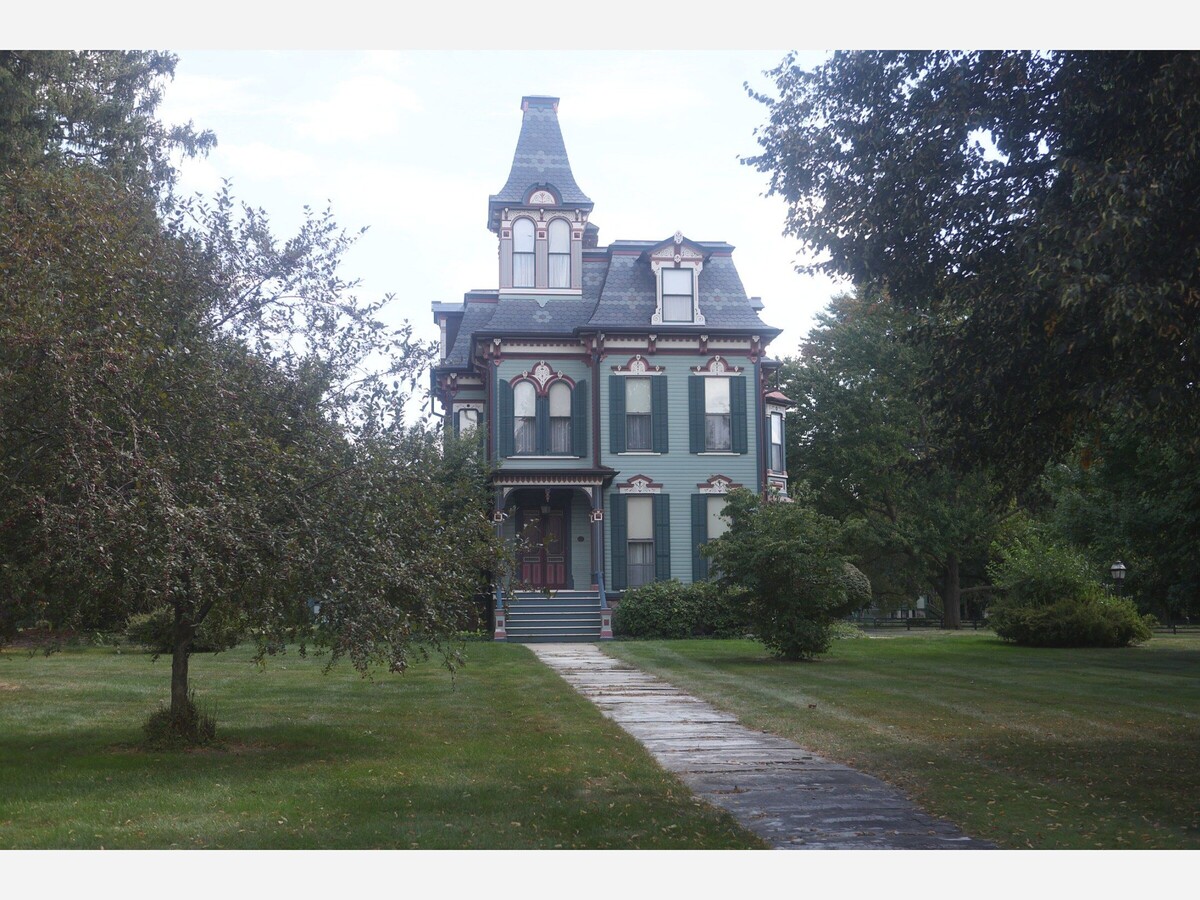
Saline City Council voted 4-3 to approve the purchase of the Davenport House/Curtiss Mansion for $3 million. Councillor Dean Girbach made the motion, seconded by Councillor Janet Dillon, which was supported by Mayor Brian Marl and Councillor Jim Dell'Orco. Councillors Tramane Halsch, Nicole Rice and Jenn Harmount voted against the measure.
Part of the motion includes striking a work group to evaluate uses for the property. A clause of the motion states that if the city cannot find funding to properly maintain the property, a corrective action plan, including the sale of the property, will be developed.
The decision was made after more than an hour of public comment. Most of the speakers and writers opposed the purchase, but it also had many supporters.
Council agreed to a purchase agreement with the honors of the home in September. Since then, the city has been studying the feasibility of the purchase but much more study will need to be done.
The city will fund the purchase with fund balance dollars and will later this year issue bonds to reimburse the fund balance.
Councillor Dean Girbach, a past president of the Saline Area Historical Society, has been Council's biggest supporter of the purchase. He noted the city has been buying property for various uses over the years, including the industrial park, housing, parkland and more.
"This is an investment in the development and the consideration of a land, and also the historic aspects of the property that, as we have heard, is something that has not changed in 150 years and is a key identity of our community," Girbach said.
Girbach pointed to historic districts on Ann Arbor Street and Henry Street.
He also said the property itself is worth more than what the city paid for it. Girbach also said forgoing the the tax revenue wasn't an important concern, noting that if tax generation was the goal, the city wouldn't maintain parking lots and parks.
Mayor Marl thanked Deputy City Manager Elle Cole and city staff for their work on the project. Apparently addressing concerns about a lack of city engagement on the issue, Marl said the matter was discussed during three town hall meetings in late 2025. Marl also dismissed the idea that poor timing would stop the city from purchasing the property.
"I agree, the timing is far from perfect, but with all due respect, that's beside the point.
"If you only act when the timing is ideal, you will undoubtedly forego countless opportunities. I'd rather lead a government which operates in the spirit of creativity and bold action than one frozen by timidity," Marl said. "I have heard calls plead for the preservation of our small-town identity as well as the preservation of our unique historic assets."
Marl said the city should give itself three years to determine whether it can turn the property into an accessible and appealing public amenity.
Councillor Janet Dillon also took with issue of the "not the right time" argument.
"In life, there's there's never a perfect time for anything. We probably would never have children. We wouldn't have bought houses or cars or things like that, because it's not the right time," Dillon said. "What we have to look at is, this is the moment in time that we are in, and when you wake up tomorrow and say, 'are we okay with not having that landmark in our community.' Is that what you're okay with?"
Dillon she hopes the city can develop public-private partnerships, as it is doing with the downtown greenspace.
She noted that city was about to sell Lot 20 on East Michigan Avenue to developers for $650,000, which could help fund the purchase. And she said there are many such opportunities.
The swing vote was Councillor Jim Dell'Orco.
"I made a pledge to the electorate when I was running for reelection that I would do everything in my capacity to ensure that those deed restrictions would be put in place (to protect the historic property)," Dell'Orco said. "With that, I also pledged that we would do so and would maneuver the acquisition in such a way that it would not become a burden on the community and the taxpayers."
Dell'Orco said the city was not closing the door on the sale of the property, but securing ownership long enough to enact historical protections and deed restrictions to prevent the home from being destroyed.
"I feel the loss of this historical asset would be a detriment in a travesty. The home has a value of historical and personal aspects that are greater than dollars and cents. That's a value that can't be measured," he said.
Councillor Halsch asked several pointed questions.
"What is our contingency, if in three years, market conditions aren't favorable?" he asked.
Deputy City Manager Cole said the real value is the land.
Halsch said he felt his question still applies. He asked who is responsible for assessing whatever plan the working group recommends.
Cole said that would be up to City Council.
"I think it'd be pretty easy to assess whether it is a balanced budget or whether it's struggling," Cole said.
Halsch said he was perturbed by the thought of the total cost of the acquisition.
"The true acquisition costs that we are signing up for today is more than the 3 million. What is that total cost that we would be committing to by year three?" he asked.
Cole said the city would have to pay the debt service and maintenance. She said that would be about $335,000 a year. But the city could recoup the principle by selling the property.
Halsch asked how much tax revenue the city would lose. Cole said the property currently pays about $17,000 a year to the city.
Halsch turned his attention to the process. He said the city didn't do enough to reach out to the public.
"It seems to me that there were a number of opportunities that I think both the city staff and also Council, especially once it was public in September, to open up the due diligence to the public," Halsch said.
He said that while the city was doing due diligence on the property, it missed the most important work.
"When we think about that 90-day period, I think the most important due diligence that we missed was the citizens of Saline," Halsch said. "So my question is, what where the barriers the Council and city staff faced to soliciting citizen input," he said. " how can we overcome those barriers to ensure that citizens are solicited at the earliest possible decision point?"
He asked if the Marl-recommended working group is enough to ensure citizen input. He noted that the owners of the house didn't see the value in protecting the home, but that the onus was being put on the city and the taxpayers.
Halsch also asked if the city had ever used Wellers for events and said he was concerned about potentially cannibalizing their business. Marl said the city working group would be instructed to find solutions that didn't detract from existing businesses.
"The reason why I am voting no is, for me, it goes back to that principle of together. We have to remember, even as we sit here as elected officials, when we think of the organizational chart, the citizens sit at the top before council and the mayor," he said, noting the public reaction and explaining his no vote.
Councillor Rice said she recalled a conversation with Mayor Marl in which she said she would do everything she could to protect the property and called it the "beacon of the City of Saline." She said the property was in terrific condition.
"With that said, I do emphatically believe this is not the right time. As someone who has been personally affected by decisions at our federal and state levels, I still believe that the next few years of our lives are up in the air as far as finances go," she said. "Honestly, any decision that a municipality can make could change at the whim of the current Administration. Therefore, as a municipality, I think we need to look at responsibly making decisions that we can control, that we can pursue, and that we can be successful upon."
She said the city has thought of the second and third order effects of the project. She asked if the city has the staffing or the community input.
Rice said voted no but said she would put every effort behind her to make it successful.
Councillor Harmount asked whether the city could seek a Historic Landmark designation to protect the house without the landowner's permission. City staff didn't know.
"It's not that I don't value the aesthetics of this building. It is a landmark of our community. However, I was also elected to be fiscally responsible and just think that even temporary ownership is a risky situation," Harmount said.
Public Comment
There was almost a full hour of public comment before the meeting and all but one comment was dedicated to the Davenport House purchase.
Bret Pollington said it was not the right time for the purchase.
"Did you ask yourselves if the community wanted wanted you to make this purchase?" Pollington asked, noting that online polls showed overwhelming opposition to the purchase. "If you purchase this home, can you honestly say you're fulfilling the desires of the people you're supposed to represent?"
Carolyn Minnette said that purchasing the home would be a foolhardy decision.
"It is fiscally irresponsible and it is disrespectful of your taxpayers' money," she said. "This is not the right time. It's a great idea, but it's not the right time."
Linda TerHaar supported purchasing the property.
"I think it's an extraordinary opportunity for the city to preserve part of its heritage," she said.
She said she liked the three-year limit to study the issue and urged Council to give the working group wide range to study the issue.
Rebecca Schneider supported the purchase.
"This beautiful Victorian home is an invaluable centerpiece to our town's history and landscape," Schneider said. "Unexpected opportunities arise. Communities can either embrace possibilities or they can default to saying no."
She said that downs that default to saying now and that won't embrace bold ideas accept mediocrity.
"I did not move here to live in a mediocre town. People who say we don't museum are completely missing the broader point that the house sits on six acres in downtown Saline. It's an extraordinary asset," Schneider said. "The property opens the doors to numerous revenue-generating possibilities. It can help support the preservation of the house itself."
She noted that many people choose to live in Saline because it's a historic, small town. She said not protecting the city's most historic asset would make people question the city's priorities.
Meredith Leith, a member of the Historic District Commission, said her background is in historic preservation. She cautioned the city against converting the house into a museum.
"They often are not revenue-generating. And in fact, the best way to preserve a house is to have somebody live in it. That is because it will have constant HVAC, it will have heat, fewer moisture problems and it will have a pair of eyes that is actively interested in the well-being of the house," she said.
Next Steps
Marl noted that the city would approve the working group to study possible uses and partnerships on the property. He noted that the clock would begin on that group in February and then issue its report by February of 2029.

Irresponsible.
Rather like the $ being spent at the Senior Center, at least a large part of it. Was just there yesterday morning and they were removing a large number of serviceable wall cabinets still in very good condition and replacing with new ones. Like many other "improvements", absolutely not needed, particularly when Saline is facing so many other priorities. Hopefully they will at least donate the old cabinets as some other organizations will be very happy to have them (as were folks who use the Senior Center).
The senior center is a great resource for us seniors who can’t afford or justify the costs of the rec center.
You constantly degrade the value of this facility and REALLY show your true colors. You should take a step back and quit the negative remarks about SASC.
My comment has nothing to do with the senior center itself. The folks and programming there are great, it is a wonderful asset for the community, and that is actually the point. It was not lacking and was among if not the best in the area already. Yet city administration decided to throw hundreds of thousands of dollars at the facility for "improvements" every single member (who also value the people and space there) that we have talked to while there believes were absolutely unnecessary. Case in point - the most recent example of replacing white full wall cabinets with absolutely nothing wrong with them with, well, new white full wall cabinets. That was not cheap and also was not needed. That is NOT a criticism of the senior center or the folks there. It is a criticism of City administrators (who we support of most matters) unwisely spending taxpayer funds on unnecessary items particularly in the face of so many other priorities and when other city assets are facing critical needs. Apologies if comments have left room for misunderstanding. My comments on this topic are NOT criticisms of the senior center or staff there. In fact, quite the opposite.

How will the working group be chosen? Are community members on the committee?
Now the city is asking for volunteers for a task force. This is hilarious


Did they announce if they’re doing the 1 mile run down Michigan avenue?

Overcast, with a high of 83 and low of 58 degrees. Overcast for the morning, clear overnight.


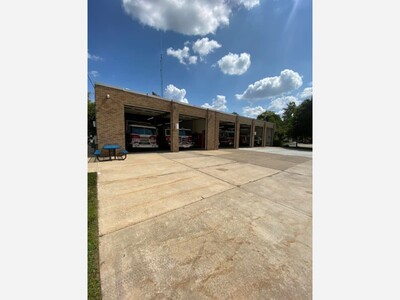
If this mileage passes, has the City of Saline, for example, committed to reduce their millage by 2.0 that they no longer
need to send to the Fire Department?
It should be stated that this mileage is going to raise the taxes for many homes by $800 per year (based on a $250K SEV). There has been no commitment that the 2.0 mil that currently exists will be replaced even though it is alluded to. That is a huge increase.
The Fire Dept. likely does have unmet needs. We have been in meetings where the Fire Chief has spoken and our impression has been that he is not fully transparent, massaging information to present a case to achieve what he wants rather than solidly and transparently defining reality and options.