46° and Fog



Image
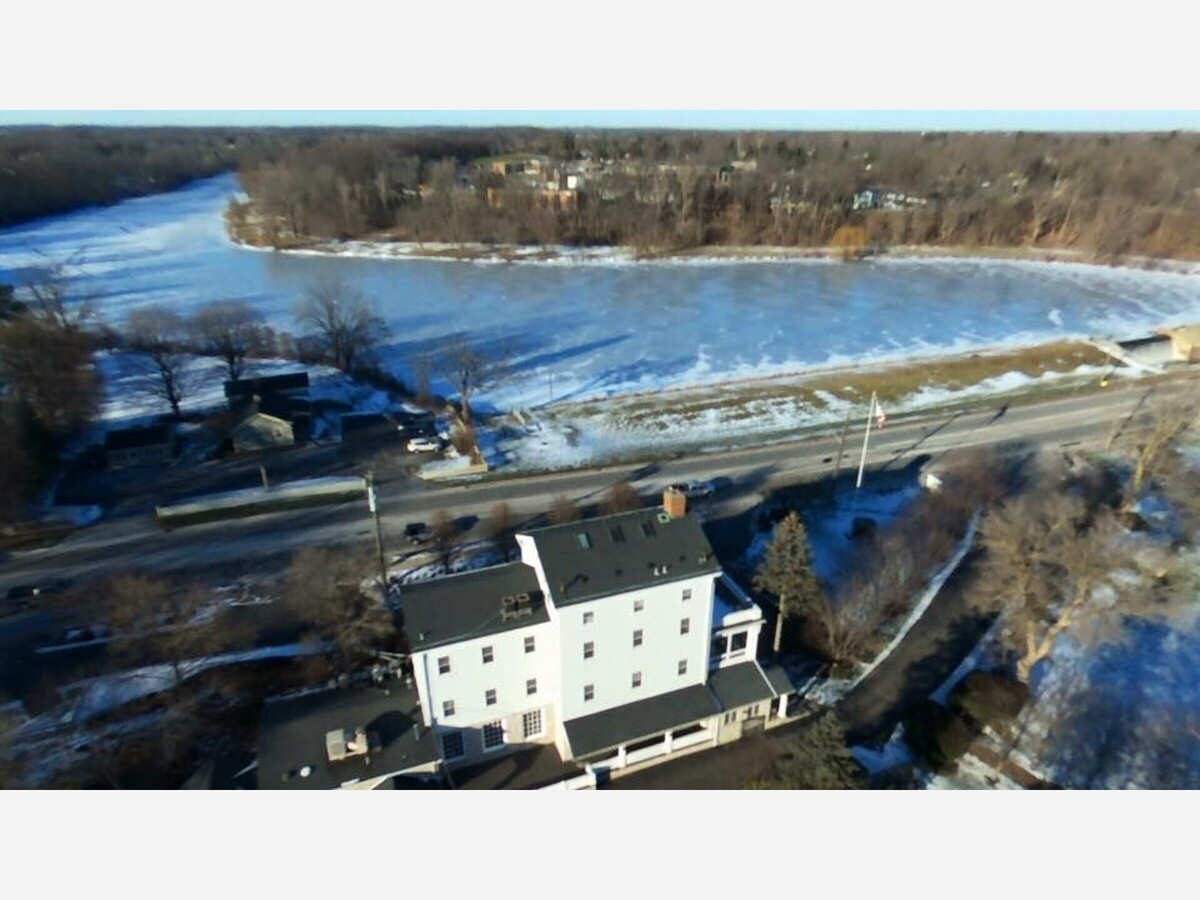
It's been almost six months since Saline City Council discussed the Saline River Dam and Mill Pond. It's been about a year since Spicer Group released its Saline River Dam removal feasibility study. It's been about five years since the Saline City Council began considering its options regarding the future of the dam and the pond.
What was clear after reviewing Monday's town hall meeting on the dam is that critics of the proposal have many of the same concerns - especially when it comes to the numbers detailing the financial issues at play, and the city still has few answers. One new wrinkle on display at Monday's meeting was talk of a lawsuit by residents if the city removes the dam and the pond.
Residents who spoke were divided, but it was clear that the majority were against removing the dam.
Removing the Dam
The site has been home to a dam for many years, even before Henry Ford built one in the 1930s to power a mill that processed soy oil. It has not been in operation since the 60s. The dam failed in 1968 and was rebuilt in 1973.
City Manager Dan Swallow emphasized that the city council has not yet decided whether to rehab or remove the dam. Listening to city engineer Tesha Humpriss, Streamside Eco Project Manager Aaron Snell, and Spicer Group Project Manager Kevin Wilks, who sat a table in front of the audience who attended the meeting, it was clear they felt that removing the dam was the prudent route.
Humpriss noted that the city owns the dam and is responsible for its liabilities. She said the dam is getting older, faces increased recurring costs, more regulation, and more frequent storm events. In terms of asset management, "the city owns a lot of stuff, and we have to consider reinvesting in an asset beyond its useful life."
Among other things, Snell referenced fish studied in the river. North of the pond, there were 20 fish species. 21 species were found downstream, and 12 species were identified in the impoundment. He noted that 18 species were blocked by the dam.
Humphriss noted that removing the dam would create 10 new acres of parkland. Preliminary investigations revealed that removing the dam could allow a walkway connecting the park and Curtiss Park under US-12.
Humphriss listed a series of maintenance and administrative tasks related to the dam that she estimated cost the city about $68,000 annually. This was much higher than a 2021 estimate of $1,000-$10,000.
Wilks then delved into perhaps the most important cost comparison. He estimated that removal of the dam would have a greater cost in the short run ($3-$5 million over five years or $5.8-6.9 million over 50 years) but lower cost in the long run than rehabbing the dam ($1-1.5 million over two years and $7.8-10.2 million over 50 years.)
"Long term it saves the city substantial dollars if the dam is removed," Wilks said.\
For the most part, while the numbers changed, the points were the same. City Manager Swallow emphasized that inspections revealed further deterioration in the dam's condition, adding a bit more pressure to the city's timetable to decide whether to rehab or remove the dam.
Residents Question Figures
Saline resident and former DPW employee Erik Grossman, as he did a year ago, questioned the costs estimated in the rehab vs remove argument
"I see numbers thrown around, all estimates, no hard numbers. To me, these estimates are extremely high," Grossman said.
He noted the estimate for refurbishing the dam's gates, on the rehab side, at $1.56 million. Grossman said when that work was done in 2005, it cost $134,000. In today's numbers, that's about $224,000.
"Your estimate is extremely high," he said.
He also noted that estimates on the "removal" side were lacking, particularly for cost estimates of a pedestrian walkway under US-12.
"A lot of these things need solid numbers," Grossman said.
Humphriss said estimates wouldn't be available until they put projects out for bid.
He also asked why the city continues to make the case with these estimates instead of repairing problems addressed years ago.
The Narratives
Some residents expressed support for removing the dam. Former City Councillor Jack Ceo was one.
"The people in those seats are saying things have reached a critical state and that we need to take action. They are trying to stop it and do something positive," Ceo said.
A Tower Street resident said she appreciated what city officials and engineers told her.
"I don't wait to think about just now. I appreciate the well-thought-out process. I will be a resident for 50-years. I want to be informed when I make a decision," she said.
But fairly overwhelmingly, the most voices were in favor of retaining the dam and the pond.
One woman called the pond one of the city's jewels. She said the city's refusal to maintain the dam caused the current issue.
"My mother always said, 'Your refusal to plan does not constitute an emergency on my part,'" she said.
Later criticized the report issued at the meeting as one-sided.
"Every teacher at Saline Area Schools would call out the bias in this. This is persuasive, not informative," she said.
One of the more passionate points was made by resident Karen Peters, who has a backyard overlooking the pond.
"What about aesthetics? What about the fishing? What about the kayaking? What about the view when I wake up every morning and see the sunshine on the pond, and why I paid a premium for the lot? And why have I lived here for 42 years?" Peters said. "You're going to totally dismantle that, and I'm supposed to be OK with that?"
Jim Peters, who previously organized a petition drive to put the matter on the ballot, said that more and more communities are converting historic industrial dams into hubs for recreation. He noted that Milan has embraced its dam.
"Milan made their dam an attraction. It's actually beautiful," he said.
Legal Costs?
Shawn Sutton listed a series of expenses he was concerned about, including debt, landscaping costs, and lawsuit costs.
Next
Swallow said the site might not change much in the next few years. The city must determine its direction and then seek funding, regardless of the route the council chooses. It's believed the state or federal government is more likely to help fund the removal of a dam.
More information
Read the presentation from the townhall.
To immerse yourself in the issues, read the project's ClearGov page.
Residents have created a website to "Save Mill Pond."

I have to commend the Saline City manager and engineer for keeping their cool and for their professionalism during the three hour Mill Pond Dam town hall meeting.
Yes, the meeting was emotional but it was also filled with illogic and contra-logic. The City was attacked for bringing this issue up and studying alternatives but then it was also attacked for not having, over the last years a more proactive asset management process. Low estimates for past projects were brought up but then the dam project was accused of utilizing high estimates. One individual tried to impugn the City and the contractor, Spicer, for creating high estimates so they could make more money despite it being explained that Spicer does not do the contractor work in the field. Despite the ecological expert explaining on several occasions that the current pond is an ecological desert, several would not accept this. The pond has a poor fish population and blocks the migration of desirable fish. Its sediment and silt consumes oxygen and creates the environment for e-coli.The migratory fowl population was mentioned. It is full of non-migratory geese that is a problem everywhere. Their excrement makes vast tracks for the field areas unusable and dangerous for recreational use. Some even tried to bring up the old false claim that the city is going to sell the entire park. Even though everyone knows that city water comes from wells and ground water, attempts were made to tie the pond removal to changes in city water supply. The recreational value of the pond was used as one reason to keep it but when a question was asked if boating, fishing, and swimming was safe, the entire room laughed. Most of the park is not used. The city is taking a good step in building the paved trail. But the fact is that the pond has not attracted much usage for 2/3rds of the Mill Pond Park land area. Few boats, canoes, or kayaks are seen (It is unclear whether they are allowed). Users avoid the geese excrement.
Yes, there were a lot of misrepresentations.
I fear that Council will make a decision for the special interests. Other than a nice view for less than a dozen of adjacent landowners and a drive-by view from US12, the pond itself has little recreational value. The park, pond, and potential restored river should be looked at as an asset for all the city residents and not just the few.
For example, Weller’s is a city attraction but should our treasury be spending $800,000 for the Mill Race exploration and repair for just one property? I would rather see that spent on water, wastewater, and potholes for the entire city.
I think what's insulting is that the city is bloating the numbers to bolster their case.
Logically, the dam has no practical use. Of course, it's going to cost more. Of course, there's a level of risk there. Of course, over some period of time, it's going to cost more to maintain than a stream.
So in that sense, logically, it's the rational decision to remove the dam. The timing is another story.
As I listened to this presentation, I felt I was being snowed.
$68,000 a year in staff time for the dam?
That's substantially more than $1-10,000 estimated 5 years ago. $68,000.That's 7 to 68 times more than previously estimated. Strikes me as fake.
Then you hear Grossman. His examples point to the city/consultant being less than honest.
And no, Spicer Group doesn't do the construction of dam projects, but Spicer Group DOES design dam removal projects.
City Manager Swallow seemed to suggest Spicer Group couldn't benefit from the project.
Life cycle cost analysis is certainly appropriate when considering new assets, but it may not be as appropriate when evaluating existing assets. Most of the City assets which are intended to last for more than seven to ten years require some level of ongoing maintenance/repair expenses which could cumulatively exceed the initial construction expense. A case in point would be the Rec Center, which is a valuable asset and whose cumulative expenses appear to have exceeded the initial construction cost, but would not nor should not be considered for demolition. Neither should the dam as they both contribute to the enjoyment of our community.
It is my opinion that Saline finances would be better off with a smaller annual expenditure for repair and maintenance of the dam than it would be with a larger initial expense to remove the dam. That is not dissimilar to the financially sound decisions which we often make as individuals, when we consider our cash flow requirements.
Thank you,David Rhoads
I need to give more thought to Jim Peters' point about turning the dam into a recreational attraction and visiting the dam in Milan.
No, that's probably not worth $10 million or whatever, but is it worth the difference between $8M and $6M?



Sunny, with a high of 65 and low of 46 degrees. Clear in the morning, sunny during the afternoon, clear during the evening,