81° and Partly Cloudy



Image
Saline Area Schools voters will elect four Board of Education members on Nov. 3: three four-year seats with no incumbents, and one two-year seat.
Running for the four-year seats are Carl Spina, Afifa Corrigan, Christy Lillie, Matt Shoemaker and Andrea S. Roe. Running for the two-year seat are Charlie Hirst, incumbent Tim Austin and Deandre J. Calbert.
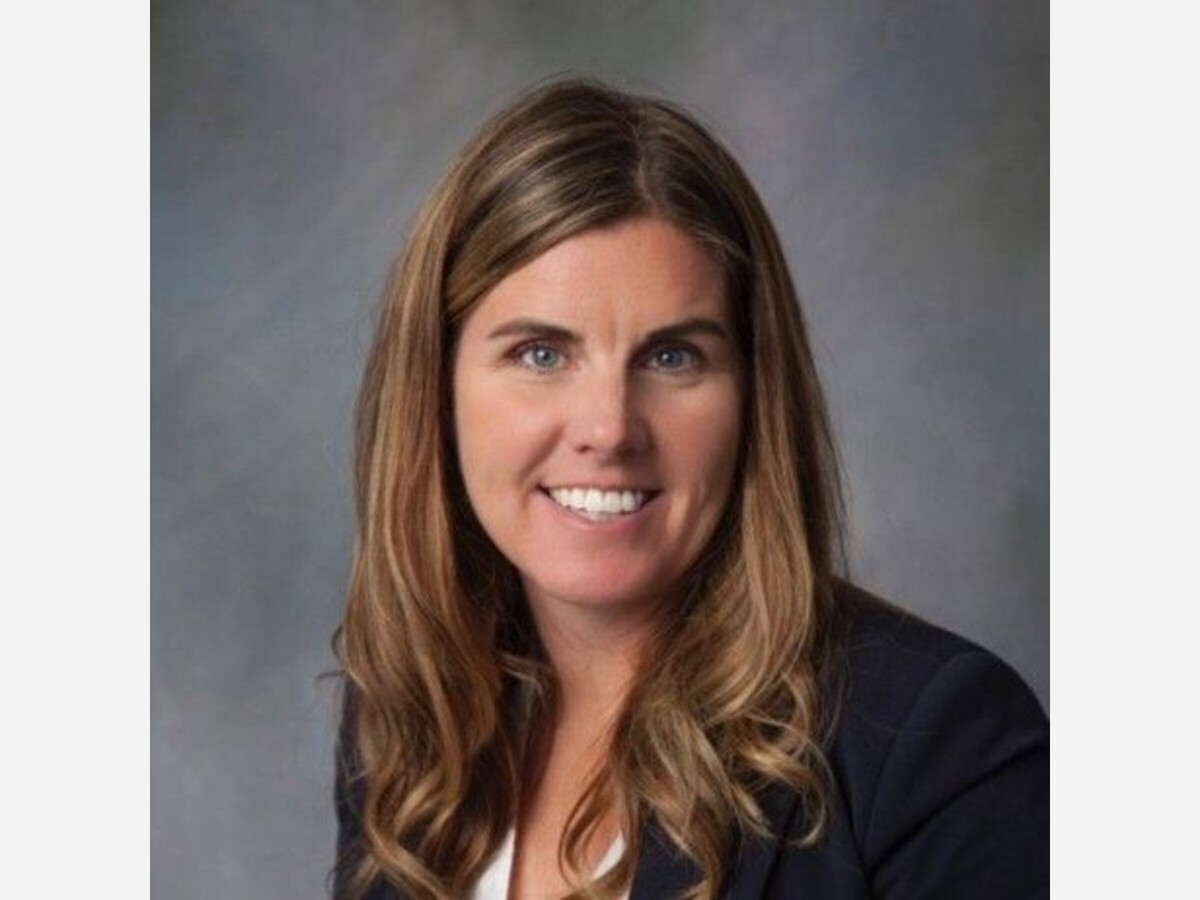
In this article, Christy Lillie responds to the same questions so voters can compare their views.
Name: Christy Lillie
Biography
Christy Lillie is a mother of six, financial-services executive, community volunteer, foster parent, and founder of Northbridge Advisory Group, a firm focused on fraud and scam prevention.
Lillie earned a Bachelor of Arts in Organizational Behavior from the University of Michigan in 2001. A varsity water-polo athlete and team captain, she was part of the program's transition from club to varsity status in 2001.
Over more than 25 years in financial services, Lillie has led large teams and managed annual budgets exceeding $100 million. Her work has included digital banking, payments, financial oversight, risk management, fraud prevention, and multi-year planning. She held senior roles at Bank of America and JPMorgan Chase, contributed to the rollout of Zelle, and served on the Zelle Advisory Committee. Her fraud and scam-prevention work across major payment networks helped
protect consumers and prevent substantial losses.
In 2026, Lillie left corporate financial services to found Northbridge Advisory Group, an independent firm focused on fraud and scam prevention technology, strategies, education, and Consumer Protection litigation.
Lillie and her family moved to Saline sixteen years ago for its schools. Her six children have experienced Saline through academics, arts, athletics, STEM, early-intervention services, IEPs, and 504 plans. She has coached Saline Middle School water polo since 2021 and serves as treasurer for Saline–Milan Girls High School Water Polo.
Her nonprofit and community service includes board and treasurer roles, including serving as treasurer of Yunnan Kids International, a nonprofit supporting orphaned and economically disadvantaged children, foster families, and care providers in Yunnan Province, China. She and her husband are foster parents and have supported children through international hosting and respite care. Their family has also led small groups at local churches.
Lillie is running for the Board of Education to bring principled leadership, strategic stewardship, with a commitment to lead with heart while staying grounded in data.
Why do you want to be on the Board of Education?
I'm running for three reasons: I care about the district's long-term strength, I want Saline to work
well for every student, and I now have the time to serve.
Strong, capable Board leadership is critical to the district's long-term strength. My
husband and I have raised six children in Saline schools. Five are still in the district, and our
family will be connected to these schools for another decade. I want Saline to have a Board that
keeps the long-term strength of the district and its students at the center.
I want Saline to work well for all students. Raising six very different children has given me six
different views of the same school system. We have experienced incredible teachers,
academics, athletics, arts, clubs, and opportunities. We have also navigated IEPs, 504 plans,
different learning needs, different identities, and some hard seasons. There really is no “typical”
student, and I want every student to be challenged, supported, and able to find a place where
they belong.
I now have the time and capacity to serve. I recently retired after 25 years in corporate
America. For most of those years, I was balancing a demanding career with raising a large
family. I now have something I did not have before: the ability to give Board service the time and
attention it deserves.
In the end, I want to help preserve what Saline does exceptionally well while also being willing
to look honestly at where we can improve, so that Saline is strong long after my own children
have graduated.
Why should voters elect you?
My experience spans both boardroom and kitchen-table decisions, and I believe effective Board
service draws on both.
Leadership and governance: I bring 25 years of leadership and governance experience that is
directly relevant to serving on the Board. Throughout my career, I led large, complex
organizations, built and developed teams, worked through disagreement, and made decisions
with real consequences. I understand the importance of clear priorities, appropriate oversight,
accountability, and the distinction between governing an organization and managing its
day-to-day operations.
Financial stewardship, sound judgment, and policy: I have extensive experience overseeing
annual budgets exceeding $100 million and balancing financial discipline, legal requirements,
long-term risk, and the real-world impact of decisions on people. That work required careful
forecasting, strong controls, transparent reporting, and thoughtful stewardship of resources. It
also taught me how to work within legal and regulatory guardrails, seek qualified expertise when
needed, identify risks early, and ask the questions necessary to make well-informed decisions.
A parent's perspective: I bring a clear view of how differently the same school system can
work for different students. As the parent of six children with different backgrounds, identities,
learning styles, and needs, I have seen that difference firsthand. Being a foster parent and
middle-school coach, along with my nonprofit and community work, has broadened that
perspective even further. Those experiences have taught me not to assume that one student's
experience represents everyone's.
I won't pretend to have every answer. I will listen, study the data, challenge assumptions, ask
difficult questions when needed, work respectfully with people who see things differently, and
change my mind when the facts warrant it.
I know what responsible oversight requires, and I have the experience and skills to do it well. I
also know how much these decisions matter to families. I would bring both perspectives to every
decision I make on the Board, with the goal of helping every Saline student feel supported,
challenged, included, and able to thrive.
At the district level, what are the three issues you care about most? What
changes would you like to see in these areas?
Board members serve the entire district, and their decisions affect every student, family, and
staff member, so I don't see this as a one, two, or even three issue job. That said, three areas
rise to the top for me, and the first is really an umbrella over everything else.
1. "All Means All" should be reflected in every student’s experience.
Saline offers tremendous opportunities, but equal availability does not always mean equal
access or success. I want us looking beyond districtwide averages and asking: Who is growing,
and who isn't? Who is participating? Who feels like they belong, and who doesn’t? And why?
That means early support for students who are struggling, strong access and support for
students with disabilities, appropriate challenges for students ready for more, and opportunities
beyond the classroom that build confidence, curiosity, and belonging.
It also means seeing the student in the middle. In a high-achieving district, students who are
doing reasonably well can still be easy to overlook and unsure where they fit. Every student
deserves help discovering their strengths, finding a place where they belong, and leaving Saline
more confident than when they arrived.
In practice, I would like the Board to regularly review growth, participation, and belonging data
broken out by student groups, and to ask what the district is doing when those numbers reveal
gaps. No student should disappear inside an average. That's what "All Means All" means to me.
2. Retaining great teachers and staff, and building a culture where people can do their
best work.
Programs and policies matter, but ultimately schools run on people. I want Saline to be a place
where excellent teachers, staff, and administrators want to come, stay, and grow.
With our superintendent now in her second year, this is a good time to establish clear baselines
for organizational health. I would like the Board to regularly review retention and turnover data
from 2025 and 2026, along with anonymized employee feedback on workload and climate. I'd
also like the Board to work with the superintendent to understand why good people stay, why
they leave, and what strategies can help.
The district should also begin planning early for the teacher contract that expires at the end of
2027. Compensation, benefits, inflation, enrollment, and expected revenue should be built into
our multi-year forecasts well before negotiations begin. Early planning can make those
conversations more informed and less reactive, and help ensure our teachers aren't left working
without a successor agreement, as we saw in 2025.
Great schools are built by great people, and keeping them has to be a priority.
3. Strategic stewardship and long-term planning.
A school budget is not simply an accounting exercise. It is one of the clearest expressions of a
district's priorities, and it is one of the Board's core responsibilities.
Strategic stewardship means looking beyond the next budget year. I would like the district to
build on the strategic plan with a five-year financial plan that accounts for enrollment, staffing,
compensation, benefits, future contracts, and other recurring obligations. I would also like to see
continued improvement in in-year forecasting, disciplined forecast-to-actual reviews, and
transparency around significant variances, up or down, in major categories of spending.
Finally, our General Fund balance is a tool, not a goal. We need healthy reserves to manage
uncertainty, but accumulating money is not success, and neither is budgeting so conservatively
that we miss responsible opportunities to invest in students today.
I have worked with budgets comparable in size to Saline's for more than a decade. I would bring
that experience to helping ensure the district uses its resources as effectively as possible and
keeps them focused where they belong: serving students.
How would you describe the current state of Saline Area Schools?
I would describe Saline as a strong district at an important inflection point, with a unique
opportunity ahead. We have talented teachers and staff, engaged families, strong academics,
and an extraordinary range of opportunities for students.
That said, strength in one area can hide gaps in another. Excellent districts are willing to
examine where outcomes or systems are falling short of expectations, even when those
conversations are uncomfortable. They put relevant information in front of the Board, ask what it
means, and use it to improve.
The measure of a strong organization is not whether it has problems. It is whether it is willing to
see them clearly, talk about them honestly, and do something about them.
So I would describe Saline as strong, with real opportunity ahead. We have a new strategic plan
and many of the resources needed to succeed. The next step is disciplined implementation:
clear measures, transparent reporting, and a willingness to adjust when something isn't working.
There's a tough issue. It's clear that your opinion does not match public
opinion. When it comes down to it, do you stick to your guns or vote with
the public?
Neither automatically.
I think one of the easiest traps in leadership is believing every decision comes down to either
"sticking to your guns" or "giving people what they want." Most of the time, when a leader takes
the time to look beneath the surface, the reality is more nuanced than it first appears.
My first responsibility would be to understand the issue. What are students and families
experiencing? What does the data show? What does the law require? Are there financial,
regulatory, safety, or student-rights considerations that place guardrails around the decision?
Some issues are not simply matters of opinion. If the law or regulation is clear, I will follow it,
informed by qualified legal counsel and relevant experts. When appropriate, I would support
seeking additional expert or legal perspective. My personal opinion does not override the law,
and neither does anyone else's.
Beyond that, I would seek the best available information: data, community input, staff and
student perspectives, expert guidance, and lessons from other districts in Michigan and
elsewhere. I would also deliberately look for information that challenges my initial view. If new
facts change my understanding, I will change my mind. To me, that is not weak leadership; it is
responsible leadership.
Public input also matters a great deal because it often reflects lived experience. People closest
to an issue can identify concerns that may never appear in a spreadsheet. Student input matters
especially because students experience our schools every day.
Board members are also elected to exercise judgment. There may be times when the most
popular answer is not the most lawful, financially responsible, or appropriate decision for
students. In those moments, I would be as transparent as legally and ethically appropriate about
the information, perspectives, and data informing my decision. Sometimes how we
communicate a difficult issue is as important as what we communicate. People deserve to
understand the reasoning, tradeoffs, and constraints behind a decision, even when they may
ultimately disagree with it. I would then make my decision grounded in the law, informed by
experts, supported by the best available facts, and centered on students.
I spent 25 years leading through difficult decisions, and I learned that disagreement does not
have to become dysfunction. Leadership is not digging in your heels simply to prove you were
right, nor is it simply following the majority view without exercising judgment. It is listening
carefully, asking questions, being willing to learn, and, ultimately, being accountable for the
decisions you make.

Sunny, with a high of 84 and low of 61 degrees. Sunny for the morning, clear in the afternoon and evening, patchy rain nearby overnight.