57° and Mist



Image
Saline Area Schools voters will elect four Board of Education members on Nov. 3: three four-year seats with no incumbents, and one two-year seat.
Running for the four-year seats are Carl Spina, Afifa Corrigan, Christy Lillie, Matt Shoemaker and Andrea S. Roe. Running for the two-year seat are Charlie Hirst, incumbent Tim Austin and Deandre J. Calbert.
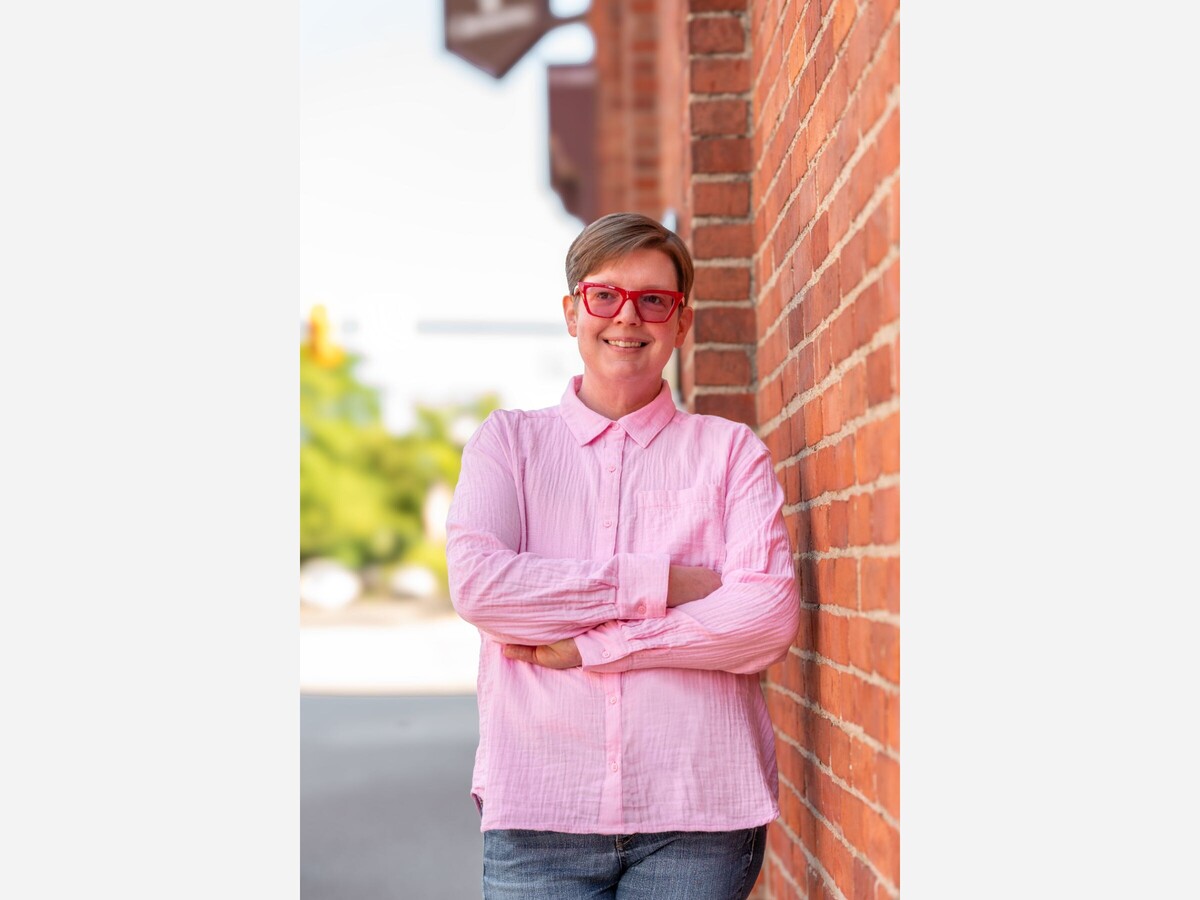
In this article, Charlie Hirst responds to the same questions so voters can compare their views.
Name: Charlie Hirst
Biography: (Include what you’d like in list format.)
Why do you want to be on the board of education?
During my time serving on the DEIAC, I witnessed many of the inequalities in student outcomes. We know that our special education and low-socioeconomic-status students need additional support to meet learning benchmarks and become lifelong learners. We know that students who take the SAT on weekends are more likely to meet testing benchmarks, but many students are unable to do so due to financial constraints, transportation issues, or limited availability. We must close opportunity gaps and improve student outcomes, especially for economically disadvantaged students and students with disabilities who are 40 points behind their peers in elementary school.
I want to serve on the Saline Board of Education in order to uplift student voices, protect special education, and promote the importance of public education. As a member of this hyperlocal co-governance body, I will channel my dedication to positive staff and student outcomes by building an inclusive, engaged, and collaborative community.
I want our schools to be the heart of our community, where everyone feels included and cared for by building trust, mutual respect, and a sense of shared purpose among stakeholders. Great public schools benefit everyone, including those without kids, those with kids who've graduated, and families who choose private or homeschool. As a school board member, I will ensure Saline remains an ideal destination to live, work, and pursue an education.
Public schools are often a child’s first exposure to community and a democratic society, and school board meetings demonstrate democracy in action. I will work tirelessly to ensure equal representation by empowering student voices, encouraging community engagement, and facilitating community conversations.
Why should voters elect you?
Voters should elect me because I have experience, I'm a great public communicator, and I will focus on student outcomes.
I have extensive experience working with school boards in Michigan. I have built a network of school board members across the state and have connected with many national organizations that support public schools and local school boards. I am committed to transparency and compliance with the Open Meetings Act so that parents never feel like decisions are being negotiated behind their back.
I have a knack for connecting with constituents from all walks of life. I will make myself available to the SAS community by email, phone, and by offering monthly office hours to connect with people in person. I will also show up across the district to attend board meetings, subcommittee meetings, and district events.
At the district level, what are the three issues you care about most? What changes would you like to see in these areas?
Absenteeism, special education, and empowering students are the three issues I care most about.
Absenteeism
Chronic absenteeism is when students miss 10% or more of school. Saline Area Schools have a chronic absenteeism rate of 13%, and we need to understand why students are unable to attend school. Is it due to mental health concerns like stress and anxiety, do they feel unsafe at school, or are they bullied? The four root causes of chronic absenteeism are barriers, aversion, disengagement, and misconceptions.We need to bridge from a general awareness of these causes to student-specific strategies that will work for our community. We also know that students of color, students with disabilities, and English language learners experience higher rates of chronic absenteeism. Reducing absenteeism will improve student outcomes.
Special Education
One of our district's biggest disparities across student outcomes impacts students with disabilities. About 17% of our students have individualized education programs (IEPs). I believe there are more students who would benefit from having an IEP, but don’t know how to navigate the process to obtain one, or who don’t want to use services because of stigma. We need to ensure families understand the services SAS provides to determine if a child would benefit from a 504, IEP, or BIP. Requests for evaluations of special education services have increased and will continue to rise as our preschool enrollment grows. We need to fully fund our schools to maintain and improve our special education program. SAS has an excellent special education department, and many people choose Saline Area Schools for the high-quality special education we offer. This program attracts families to our district, and if it were to decline, it would negatively impact student enrollment.
We also need to work to destigmatize special education and disability. Currently, 3rd graders in our district participate in the Students Talking And Relating (STAR) program. This program aims to teach students about diversity and disabilities, and how to be friends with someone living with a disability. It was designed to enhance relations across students of differing abilities and enrich their social and communication experiences. It also teaches students about the different modalities that people living with disabilities use to meet their needs, such as Braille, service dogs, and sign language. We should expand this program with grade-appropriate updates throughout the public school journey. Less stigma means more kids accessing services they need, which in turn better outcomes for students and the district as a whole.
Empowering students
I want our schools to be student-centered, and that means involving students directly in the decisions that will impact their education. Students will have better outcomes if they have a sense of ownership in the decision-making process. During my time working with Lenawee Community Mental Health Authority I have learned that “Youth should be viewed as experts and equal partners in creating system change.” (source Involving Youth in Positive Youth Development | Youth.gov). In my field, this applies to youth helping to build their own plan to improve their mental health. I think we need to apply this model to public education. When youth are included in the development of programs, policies, and decision-making, they are more likely to be utilized by students, increasing their effectiveness and improving student outcomes. It also teaches them about different ways to approach a problem, normalizes offering and accepting feedback, and collaborating across differences.
When students help to build a system, it creates a culture of civic responsibility. Student school board representatives serve as a direct link between the board and the student body. It is also the only government role dedicated to youth. Involving youth in the decision-making process can help close the governance gap. The governance gap is the difference between the policy’s intention and its actual impact on the classroom. Having students in leadership on the school board will benefit school culture, improve student-teacher relationships, and make it more challenging to disengage from the system they helped build. I want to change the current policy to have the student reps on the school board elected by their peers and to give them a full vote in all school board decisions. I want students to be notified and invited to IEP meetings.
How would you describe the current state of Saline Area Schools?
I think Saline Area Schools is an excellent district that is currently in great shape. I think Dr. Kowalski has been doing a great job acclimating to Saline, engaging our community, and leading the district. Financially, the district is doing well: we have a healthy fund balance, voters overwhelmingly renewed the CARES and sinking fund millages, and we have passionate people leading our finance office. We have a 95% graduation rate while the state average is around 85%.
But there is always room for improvement when we care about student outcomes.
We must continue to develop a culture of inclusiveness across the district. The DEIAC has started to gel under the leadership of Dr. Kerr, and the applicant pool grows every year. This signals to me that Saline has moved toward more effective inclusion that is so necessary as our community grows and diversifies.
Hypothetical: The district learns it will have a one-time $10 million fund to spend. What are your priorities for spending it?
School funding is extremely complicated; some funds can only be used for facilities, the purchase of new technology, or staff salaries. The cost to run Saline Area Schools is over $87 million. If this magical no-strings attached pot of $10 million can be used for anything, I would first connect with the Saline Education Association and Education Support Professionals to look over the collective bargaining agreement that was passed at the start of 2026 to see if there are things that had to be cut during negotiations that we could now afford. Can we offer a better health insurance package? Can we hire additional para-professionals? Can we endow a fund to purchase classroom supplies?
I’d also like to offer a late bus to enable students who would otherwise be unable to participate in after-school activities to do so. I would set aside $1 million to create a fund that students can access to help cover the cost of instrument rentals, school sports, class trips, and other amazing opportunities SAS offers, which not every student can access due to economic constraints.
There’s a tough issue. It’s become clear that your opinion does not match public opinion. When it comes down to it, do you stick to your guns or vote in line with the public?
I will always cast my vote in favor of protecting students, protecting staff, and increasing access to necessary services, whether the public opinion of the moment agrees with me or not. Every decision a school board makes needs to improve student outcomes. Before reaching a vote, I would speak with my fellow board members to find common ground on this issue. Do we both understand the issue in the same way? Do we have the same information, and do we share a common goal? Are we asking questions out of curiosity or to reinforce preconceived notions? I would reach out to other stakeholders in the community, like SAS staff, parents, and students. I would consider whether my decision-making process is based on values and morals, or personally held beliefs. I would consider what is best for students and SAS staff and vote that way even if it is counter to public opinion. Decision-making must be based on what is best for student outcomes.

Overcast, with a high of 68 and low of 54 degrees. Mist in the morning, overcast during the afternoon, patchy rain nearby overnight.