47° and Mist



Image
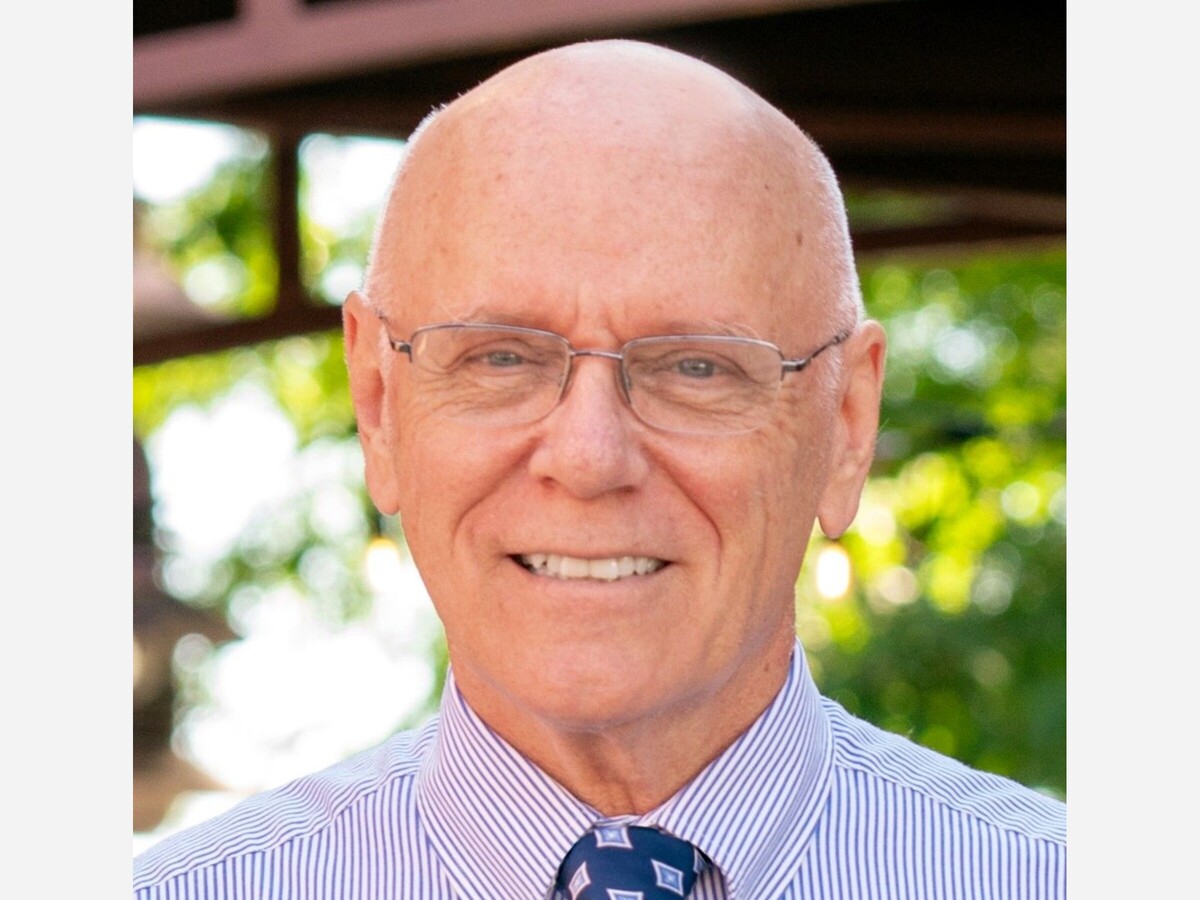
City of Saline voters will elect their Mayor in the November election. Longtime Mayor Brian Marl faces Michael McVey, who was elected to the Board of Education and served several years as its president. The mayor serves a four-year term.
In this feature, Michael McVey answers questions from The Saline Post.
Name
Michael McVey
Biography (list what you’d like):
After many years teaching special education and high school English in Canada, I emigrated to the United States to attend the master's program at the University of Arizona in Tucson. During that time, I left K-12 teaching to join the teacher education program, work on a doctorate, and raise a child (not in that order) during the cracks of my day. I was later invited to join the faculty at Eastern Michigan University's Teacher Education Department. That wasn't easy, given how well-regarded EMU is in this state. I moved to Saline in 2007 and began engaging with city life. Ten years ago, I was elected to the Saline Area Schools Board of Education, then reelected six years later. I served for three years as president of the board. I am married and have three grown children.
Why do you want to be Mayor?
I am running for Mayor because I believe Saline’s future depends on disciplined planning, responsible stewardship of public resources and assets, and elected leadership that listens to its citizens, its advisors, and the staff who keep this city running. I am committed to ensuring that our community remains strong, sustainable, and welcoming to businesses and families for generations to come.
Why should voters choose you?
As your new Mayor, I will have a skill set, work ethic, and a wide range of experiences, both in work and life, that make me suited to the leadership challenges unique to Saline. So much of my training in education has prepared me for this role. To be an excellent teacher, you need empathy and planning. To lead in higher education, you need to gather resources and build teams that provide guidance and insight. You also need to share those outcomes through clear, unbiased communication. To be an excellent board and council member, you need to listen, communicate, engage, and do the research to understand the issues.
These are the skills Saline's citizens need, and they have prepared me to serve on day one.
If elected, what are your priorities? How will you work on them?
I will have several priorities beginning well before I am sworn in.
My first priority will be to build relationships with elected officials I have not yet met who serve adjacent to Saline.
I would then meet with and review the work of our commissions and working groups to determine if they have what they need to accomplish their charges.
I would work with city leadership, including our new (or interim) city manager, to determine ways to ensure staff work is respected and that they are engaged in projects that fit well with their long-term plans.
Additionally, I would like to review our communications plan so that the citizens of Saline have every opportunity to understand issues that will affect them directly.
Finally, I would like to develop or enhance an operating procedure manual and provide clear onboarding for our newest councilpersons to ensure they understand their roles and how we, as a council, can work most effectively to support the city's needs.
How many hours a week should the mayor spend on the job?
I appreciate this question because it gets to the heart of one of my concerns about how the role has expanded incrementally over the last decade. Obviously, as your Mayor, my schedule will bring different challenges and pressures each week. I could conceivably spend many hours in the role to gain a deeper understanding of key issues, prepare the agenda for our meetings, engage with community members and various commissions, working groups, and committees, and take external training through the Michigan Municipal League and other venues. That said, the Charter does not expect the Mayor to be a 9-to-5 office job, and many tasks can and should be delegated to our excellent staff.
If the City of Saline is asked to be home to a data center, what’s your response?
My personal inclination would be to vocally decline; however, it can never be my decision alone. Any such request, from a data center or any industry seeking to use our resources, would need to go to City Council for open and vigorous discussion. In those discussions, as your Mayor, I would strive to ensure we examine promises and pledges made to Saline and put solid legal and ethical safeguards in place to hold them accountable.
The Saline City Council voted 7-0 to require trans people to use the Rec Center change room of their identified gender. Some women feel city council has taken away a safe space for women. Do you support the decision? What’s your message to a woman who feels disenfranchised by the city?
This difficult issue involves two legitimate interests: the dignity and inclusion of transgender people, and the privacy, dignity, and comfort of other users of changing facilities.
Whether or not I "support" the council's decision is less useful than evaluating its tradeoffs. Offering a private room may work operationally, but it's also easy to see why some women would feel the burden has been shifted entirely onto them. They may reasonably feel that their concerns have been deprioritized.
I believe we should look for ways to maximize privacy for everyone, such as increasing the number of private changing stalls, redesigning changing areas with individual changing cubicles and shared locker space, and creating optional private or family changing rooms that are available to any patron, without suggesting they are intended for any one group.
We need to clearly communicate expectations around respectful behavior, privacy, and harassment for all users. A good policy tries to accommodate both interests as much as practicable, rather than assuming one concern simply overrides the other.
How do you feel about the state of the city?
This is a multifaceted question, so let me try to address some of the elements that inspire me and a few that concern me.
I believe that Saline thoroughly embraces its historical and agricultural heritage, but we could do more. We have a first-class school system in Saline Area Schools, but we could engage more with them as a city – the Saline Connected group is a great start.
Safety concerns have long topped my list of areas where City Council needs to focus more, and I am delighted that the Risk Mitigation Working Group has put its concerns before Council. Even more important, their recent report urged Council to keep risk mitigation at the forefront of its work.
We need to be cautious with our discretionary spending while continuing our placemaking efforts and looking for new projects.
We need to ensure that, in addition to the physical safety of our residents, we pay attention to ways the city can focus on mental health.
We have regional points of pride in our city, like the Saline District Library and Saline Area Senior Center, and even though other regional assets like the Recreation Center are showing their age, a great staff and a supportive City Council are working to make them shine.
Should the city remove the dam or preserve Mill Pond?
When I was younger, I spent many summers canoeing on lakes, from Algonquin Park to the farthest wilds of Northern Ontario. I'm comfortable enjoying the pond for its beauty and using it for exercise. People most concerned about keeping or losing the dam must understand that both decisions have a cost. The greater long-term financial cost would be keeping and maintaining the dam. If the citizens of Saline understand the financial burden, then I would support that decision.
Are you supportive of the Kinley development and downtown gathering space? Should the city consider zoning variances or looking the other way on parking rules to help make it happen?
The Kinley development is an excellent placemaking venture. Looking the other way on regulations will create the expectation that an easy fix is always available. I think zoning variances, properly evaluated, are the way forward.
What would you like to see at the Davenport-Curtiss mansion?
I would like to make it open to as many groups as possible for as many valid and reasonable uses as we can imagine. As President Kelly of EMU told the working group, we need to imagine boldly. With that in mind, we need to remember that it is not just an empty shell but rather a remarkable collection of furniture, musical instruments, and fashion design from our collective past. I’m excited to hear reports from the excellent working group, and I hope they will also keep in mind the importance of the grounds. They are spacious and remain well maintained, thanks to the efforts of the City’s DPW. Not only are the grounds and buildings beautiful, but their location on Highway 12 also makes them visible to folks passing through. If we take enough care of the property, we tell the world that Saline cares for its treasured landmarks.
What’s the way forward on the Rec Center? How much city money should fund Rec Center operations every year?
I have often said that the Rec Center is an asset the city needs to support. I am comfortable with it running at a deficit if staff and Council continue to look for ways to reduce costs, increase revenues, and continue providing relevant programming. During my first four years as Mayor, I will keep a close eye on their progress and continue to look for ways that Council can assist the center.
Is the lack of retention a problem at City Hall? If so, how can the city see stabilization?
People come and go in large institutions all the time; their skills develop, and they sometimes outgrow their initial job descriptions. Some of the higher-profile transitions have made perfect sense; in fact, many I spoke with had a clear professional or personal reason for leaving. As your mayor, I will focus on ensuring, through exit interviews and other methods, that the city can improve their experiences.
Part of my focus on dedicated planning, what we CAN do as a city, is ensure that training documents are kept updated, that there are clear succession plans and guidance documents in place, and that we make it clear that when key staffers depart, they know we appreciated their service and we wish them the best in their next endeavor.
Tell us about a time when you made a decision that you later realized was wrong. What did you do to correct it, and what did you learn from the experience? As Mayor, how will residents know when you have made a mistake, and what will you do when they hold you accountable?
As I mentioned in a video Interview with Libby Williams (Coffee with the Candidates), not focusing enough on the concerns of some Saline Area Schools parents about athletic issues blinded me to broader concerns they had. I realized this was an error in judgment. When the school board voted for an athletic review, as Board president, I did everything in my power to ensure that we found a review team with the best credentials and provided them with everything they needed, including full access to coaches and directors; then I let them do their work. I don’t have a problem telling the community when I have made a mistake, and I will work to ensure it doesn’t happen again. Constructive criticism is always welcome.
What’s your vision of administrative leadership in the city? City Manager, then what? What other positions do we need? Specifically, any new positions?
The position I am most delighted to see supported is the relatively new one of Economic Development Director. I would also like to see Saline Connected strengthened. I’m not sure who on staff will do it, but someone dedicated to “managing the book” of risk mitigation strategies would be a valued asset.
Describe your leadership style and why it would be beneficial to the city?
My leadership style is principled, collaborative, data-informed, and service-oriented. City staff and my council colleagues will quickly see that my style is NOT about authority but about creating the conditions where others can succeed. I want people to thrive. I am uncomfortable with leadership that is opaque or focused on political maneuvering. When something goes wrong, I look for ways to grow from the experience. Data may inform my decisions, but my values drive them. I seek to be a community steward.
Lay it down straight. Why would you be a better mayor than your opponent?
I bring 40 years of governance experience. I know how to listen, build consensus, oversee complex organizations, and turn policy into action. I would bring that experience to City Hall on day one.
My opponent has 14 years of experience as mayor, but I have over 40 years of experience in governance and organizational leadership. As one Salinian at Oktoberfest told me, “Wow! You have done everything BUT serve on City Council!” I have headed school departments, directed university programs, served on our district school board and its many committees, held leadership positions nationally, represented my colleagues on Faculty Senate and various councils, led our graduate school, and so much more.
The difference isn’t about experience in a particular role. The difference is my breadth of experience and the broad perspective and wisdom it has given me. If elected, I will be YOUR Mayor from Day One.

Long overdue for change at city hall and that starts with the Mayor. I’m voting for McVey!
The challenger for the Mayors role was on the Saline Area School Board for many years. When he joined the Board, The Saline Area School District was the #7 rated High School in the State. While he served in Leadership of the School Board, the High School fell thirteen places to 20th. He failed our children and our community and showed us the impact of ineffective leadership.
Seems like we are looking to replace an effective leader who has brought us the first creation of a city center ever, brought funding to the City at the highest levels in generations with a person who has only delivered a decline in success in the School District and trying to do the same thing to the city. Vote for Brian Marl, continue the progress he has brought our community.
Come on man, Michigan has approx 1,259 high schools. A drop from 4 to 17 is insignificant in these subjective rankings. Saline is still very much a top notch school, for you to say otherwise is unreasonable
Another fact to consider why McVey failed us while serving on the School Board.
In 2010 we had 124 School of Choice students out of a headcount of 5279 students. When he joined the School Board in 2017 we had 368 SOC students out of a headcount of 5205 students. Academically we were ranked as the 4th
best High School in the State.
The SOC policy in place at the time reflected a policy that allowed for out of district students to maintain the student/teacher ratios to ensure financial stability in the district and the academic mission was successful.
This also means that in 2010 we did not receive $620,000 in property taxes from those families who attended Saline Schools but did not pay the Saline Area School Property taxes while in district families paid an average of $5k each year in Property Taxes dedicated to Saline Area Schools. (using ave housing cost in the District)
For the School year 2025 we had 412 School of Choice Students out of a headcount of 4598 students. Using the same property value of $400k (which actually grew from 2010 to 2025 so this number is conservative) this resulted in over $2M in lost tax revenue.
What this shows that in 2025 (after he served in leadership from 2017 – 2025)
1) we reduced our student/teacher ratio,
2) lost over $2 million in property taxes per year (with a SOC count of 412 students) and
3) we dropped in academic performance from 4th to 20th.
Those are the facts about his effectiveness as a leader of our School District. Facts are stubborn things.
It is up to the voters to decide whether that is the track record you want as Mayor of our community.



Sunny, with a high of 68 and low of 45 degrees. Clear in the morning, overcast during the afternoon, clear overnight.