73° and Light drizzle



Image
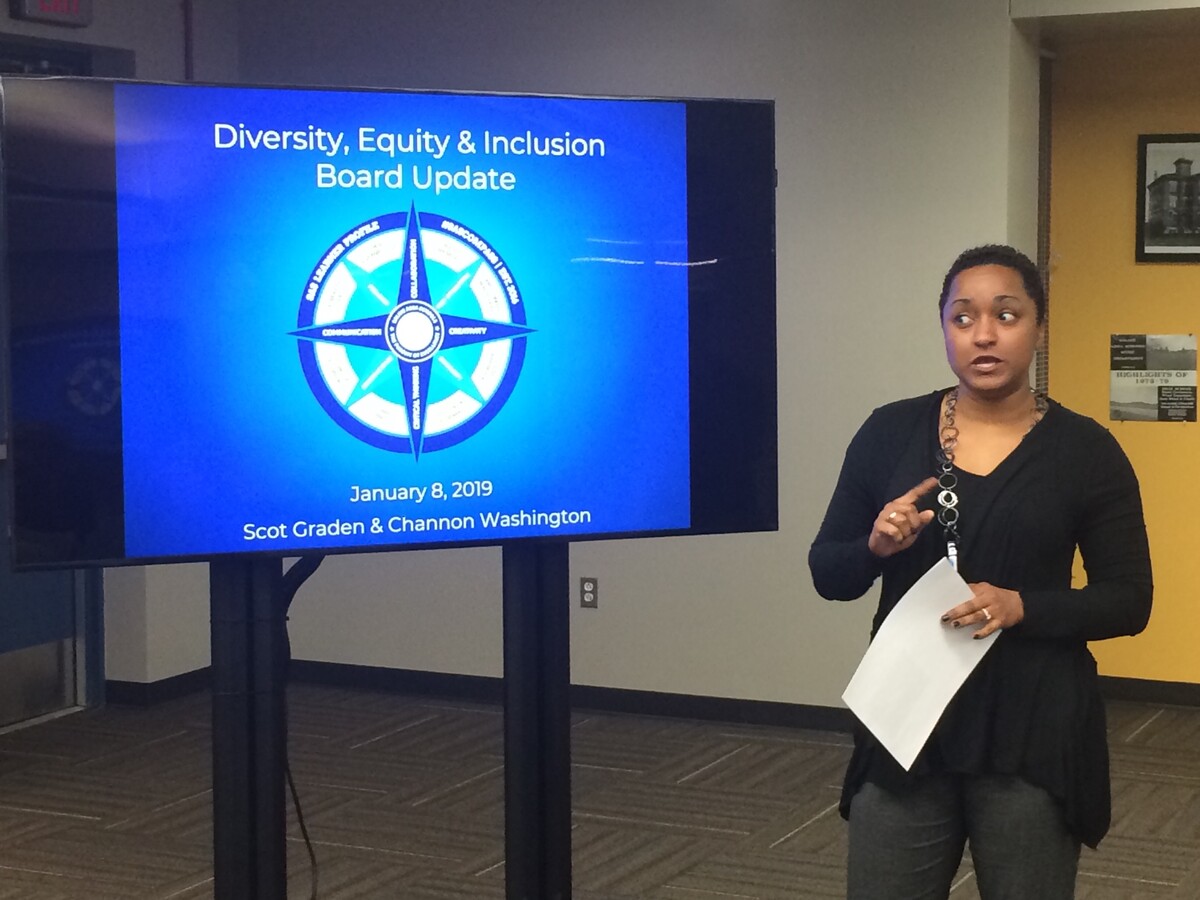
"How do you respond to a student using the N-word in class?" Saline resident Channon Washington asked the Saline Area Schools Board of Education at this Tuesday's Board of Education meeting.
Washington is an educator with two of her own children in the district. She has been helping lead "Diversity, Equity, & Inclusion" efforts, which in part is making district officials and staff face these and other challenging questions.
"There's no lesson on that in college, there's no first day new teacher training on that, it just doesn't happen."
Washington got involved in leading the district's efforts to pursue its goal of enhancing "a positive school environment that promotes student and staff well-being, satisfaction, and positive morale" from the Saline Area Schools Strategic Framework.
The five program action steps the district is pursuing to achieve this goal from an ethnic diversity standpoint include:
Since 2017 Diversity, Equity, & Inclusion has involved sending nearly a dozen district officials to the Washtenaw Intermediate School District's Justice Leaders course for training on how to expand their view of ethnicity beyond their own ethnic background, as well as how to handle instances of expressed racial intolerance between students.
DEI has also involved presentations and public discussions on this topic. The goal is to expand these efforts until Saline Area Schools has developed strong organizational awareness of the issues surrounding the topic.
"The world does not look like Saline and we are sending our students out into the world, and it is incumbent upon us to really focus on that as an area of improvement for a variety of reasons," said Superintendent Scott Graden, adding that the DEI participants will begin delving into curriculum and policy, which will truly begin the transformation process for the district as the board reviews and approves policies aimed that these topics.
Washington became involved when a white Saline schools student hurled the N-word at an African American student in the same class. Knowing both of the parents and being contacted by the victim's mother, she felt her background working at Rochester Community Schools as the only African American teacher would serve the Saline community and school system well.
"I think this incident began a lot of conversations," Washington said. "This particular parent was frustrated with the way it was handled."
She explained that Saline Area Schools staff from the administration all the way down to the teachers must have a plan for handling such an incident the same way there are plans for fire drills or lock downs.
"You don't want to act on emotions -- you want to rely on training," she explained. "What we have to do as educators is we have to remove the shock of the racial slur and understand that we cant be stuck in the moment. There is a lot of damage that can be done to students who hear a racial slur. You have to interrupt, educate, and offer reconciliation for kids because then they can go back to the most important thing, which is learning. And that is for both,"
DEI's next steps involve looking at local and regional models for dealing with these topics, as well as forming a committee and ultimately sending policy to the school board for passage into district policy which will exist in the district's handbook as more tools to be used by Saline educators in these tough situations.
Graden said the demographic makeup of Saline as a whole is changing and that it's time for the community's school system to get ahead of that change in the coming years with help from the DEI community participants and future committee members.


Overcast, with a high of 83 and low of 65 degrees. Light drizzle for the morning, patchy rain nearby in the afternoon, overcast in the evening, patchy rain nearby overnight.